


For over a decade, Ukraine and Israel have been fighting direct aggression.
In Israel’s case, it was a threat from lethal Iranian proxies metastasizing on their borders in the aftermath of allied failures in Lebanon, Iraq and Syria — which the 2015 Joint Comprehensive Plan of Action did noting to address.
In Ukraine’s case, it was a direct invasion — the very fact of which Moscow denied for years — of Crimea and parts of Donbas in early 2014 by Russia using recruited agents, special forces and rebadged army units.
Amazingly (but perhaps in retrospect unsurprisingly), this surge in aggression coincided with an allied exit from combat.
US troops had left Iraq by the end of 2011. The NATO-led air mission in Libya ended even earlier — in October 2011. No allied ground forces ever deployed there.
NATO forces handed over full responsibility for combat operations in Afghanistan to the Afghan National Army (ANA) on December 28th, 2014.
Earlier in 2014, the US and a few allies launched an air campaign in Syria against the Islamic State in Syria/the Levant (ISIS/ISIL); by 2018-19, there were about 2,000 US troops in Syria, together with sundry allied special forces. They took little action against Assad’s forces and none against Iranian proxies.
In other words, as Iran and Russia mounted existential threats to Israel and Ukraine, allied combat operations were winding down.
The US remained Israel’s strategic military partner. Starting in 2015, Canada, the UK and US launched small military training missions for Ukraine. But otherwise the victims of Iranian and Russian aggression were left to fend for themselves.
Then came the big Russian invasion of 2022. Allies boosted military support. But the US cut it off in 2025. The EU is now finally making a 90 billion euro loan available to Ukraine that constitutes a sizeable overall increase.
Yet allies have avoided military operations, let alone combat, in support of Ukraine.
When Hamas terrorists attacked Israel on October 7th, 2023 — partly to distract from Ukraine — allies provided little direct support to Israel outside existing channels.
Apart from partial interdiction of a few Iranian drones and missiles, allies stayed out of this conflict. Canada and others have even curbed military exports to Israel.
This decade of military inaction started to change last June when the US joined Israel in a twelve-day air campaign to destroy Iranian military and nuclear sites.
On February 28th, 2026 Israel and the US launched a five-week operation that killed Iranian senior leaders, destroyed most of their navy, and seriously damaged the capacity of the Khomeinist regime to pursue ballistic missile, nuclear weapon, uranium enrichment, drone, air defence or other military programmes.
On April 13th, the US blockaded Iranian ports.
The Diehard Optimist has been sceptical from the start about the Trump Administration’s Iran strategy. We doubted that a president so in thrall to the Kremlin could curb or prevent, in any enduring way, a Russian ally’s ability to pursue proxy wars or aggression in other forms.
We had observed the TACO trade, and were glad it applied to Canada and Greenland as well. We were not aware — until very recently — of Trump’s hawkish views on Iran from the 1980s, dating all the way back to the 1980 hostage débâcle.
Be those circumstances as they may be, the US has now re-entered combat against a major aggressor on a scale we have not seen for well over a decade.
This military campaign so far has not been flaky or impulsive. It has reflected competent military planning by the Pentagon and CENTCOM. So far it has devastated Iran’s military and war-fighting capabilities.
Now the blockade is devastating their economy.
We have not seen naval blockade of one or more country’s ports or shipping on such a scale since the 1990 Gulf War or the 1962 US naval quarantine of Cuba.
By way of comparison, the blockade of Venezuela earlier this year involved one carrier strike group — about a dozen warships in total.
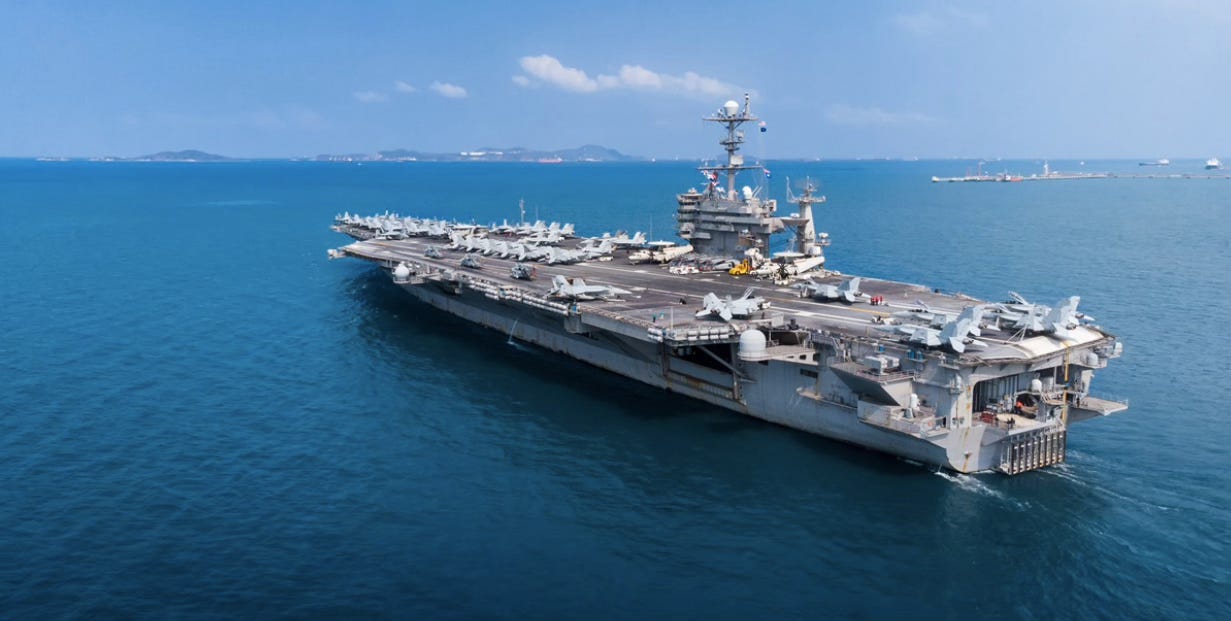
The 1962 operation in Cuba was much larger, as were operations in the Persian Gulf in the 1990s, which continued for over a decade after Saddam’s invasion of Kuwait. The US now has three carrier strike groups supporting its blockade of Iran.
The US position is stronger partly because US oil production is eight million barrels per day higher than in 2010, making it the world’s top producer.
What will be the result of this blockade?
The first goal should be to end Iran’s external aggression, including its nuclear ambitions. The second should be to end domestic repression in Iran. The third should be to set conditions for a new regime that unlocks the potential of this great country and its people. Will any of these goals be achieved?
