


The following is a speech given at yesterday’s 2026 Defence and Security Studies Conference of the Royal Canadian Military Institute in Toronto.
The theme of the conference was ‘If I Only Had a DIME: Canadian National Power in the New Global (Dis)Order’. Four speakers addressed each dimension of the diplomatic, information, military and economic (DIME) rubric.
These remarks focused on the outlook for Canadian diplomatic and political influence:
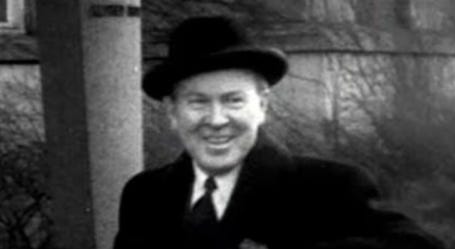
(Lester Pearson, Canada’s secretary of state for external affairs until June 20th, 1957, arriving in Oslo to receive the Nobel peace prize on December 10th, 1957)
Ask almost any AI platform today for a joke about Lester Pearson and diplomacy, and you will get this one: “The chief distinction of a diplomat is that he can say no in such a way that it sounds like yes.”
Self-effacing and anodyne like Pearson himself, the online world can nevertheless not enlighten us as to when Canada’s most famous diplomat actually made this remark. It seems to be a free-floating quotation, unmoored to any particular context — perhaps from early in his career, perhaps not.
My time as a diplomat began in an era whose flavour was very different from the cordite-tinged interwar, wartime and Cold War periods Pearson had known. By 1991, the chief distinction of a diplomat was to struggle for relevance. In those days, like our military colleagues, we mostly said yes — but in a manner that did not incur future spending obligations. By the 1990s most policy-makers worshipped at the altar of free trade. Trade negotiators were larger-than-life figures. Business, investment and market economics would resolve most of the world’s problems, or so many believed — perhaps with a little help from HIPC debt forgiveness, NEPAD & the Ottawa process.
‘So how did that work out?’ is a question with which we are still coming to grips. To make a very long story short, the diplomacy of the 1990s mostly failed. Global imbalances and incompatibilities reasserted themselves. Genocide happened in Rwanda and Srebrenica. Acts of aggression multiplied.
When two decades later I became an elected politician — that profession was still relevant, if somewhat infamously so. One of Churchill’s early quotes is apt: “Politics is almost as exciting as war, and quite as dangerous. In war you can only be killed once, but in politics many times.”
Having worked as a diplomat under fire in both Russia and Afghanistan — on the other side of the Northwest Frontier on which Churchill served — I can agree politics is considerably less exciting than war. This may be simply because the results of politics are almost always deferred.
Is political death worse than death on the battlefield? The very question is absurd. But one thing is certain: the political casualty, who is only metaphorically dead, has the very real misfortune to witness the aftermath of his or her fall from grace.
We are not here to re-litigate the legacies of Pearson or Churchill, the Cold War or the mission in Afghanistan. Canadian diplomacy seems a far safer, more prosaic topic.
Except that it is not. These remarks are being made by one who is still firmly convinced that political leadership and diplomacy remain key drivers of world affairs — and that Canada has an outsized role to play even and perhaps especially in today’s landscape of hard risks and shape-shifting friends and foes.
Pearson dedicated his Nobel acceptance speech to a goal he — a true son of the manse — described as “the Empire of Peace.” His Nobel lecture focused on what he called the four faces of peace — prosperity, power, policy and people.
Pearson had seen his country make huge wartime sacrifices for peace. A generation earlier, Borden had spoken of “establishing upon permanent ideals a League for the enforcement of international right and for the prevention of future war.”
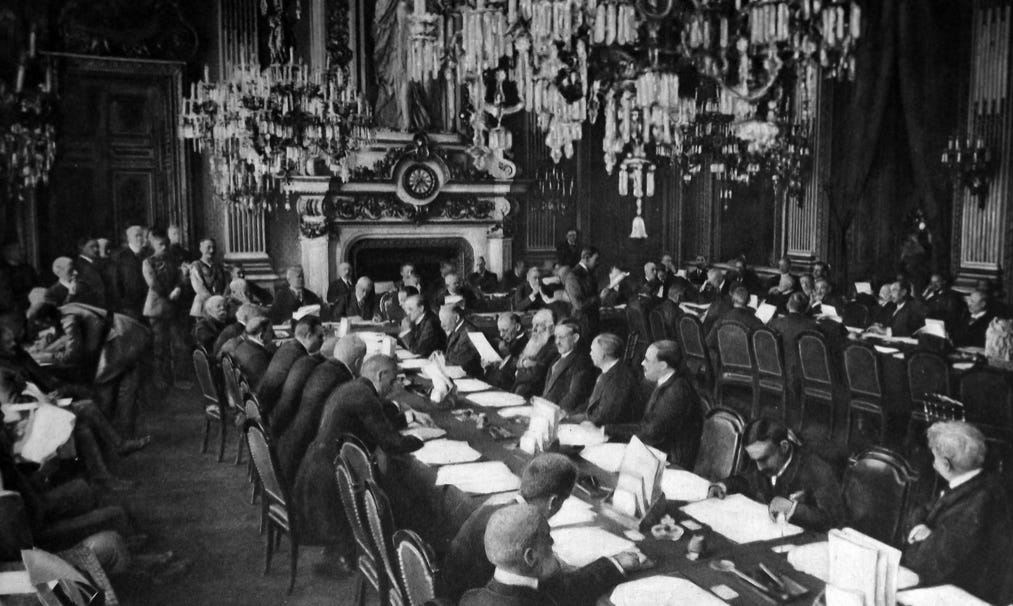
(Opening session of the Versailles peace conference, Trianon palace, January 1919)
That league had failed after only two decades. When Pearson spoke, the UN was only twelve years old, and had yet to prove itself. In his 1957 Nobel acceptance speech, Pearson acknowledged that the “determined and effective will to peace displaying itself in action and policy remains to be achieved.”
The longing for peace, as expressed by Borden, Pearson and so many others, was an old ideal — in modern form, as old as Immanuel Kant’s philosophical sketch of ‘Perpetual Peace’ published in Königsberg in 1795. The Congress of Vienna aspired to implement it. By the 1860s and certainly after the 1878 Congress of Berlin, the balance of power created by this Concert of Europe had started to fall apart.
Twice in the twentieth century new and elaborate machineries of peace were attempted — with the League of Nations, then later the United Nations. Canada was present at the creation for both.
Borden saw the League Covenant, backed by 32 states, as a solemn pledge “that not force but right and justice shall be the arbiter of international disputes.”
Yet both the League and more recently the UN failed to keep the peace.
The League’s failure heralded the Second World War, which was only ended by allied victories in Europe and Asia. How will the UN’s jarring state of disrepair be handled? How can a middle power like Canada generate and exert decisive diplomatic and political influence in this century?
To answer this question, I want to cover three issues — first, how the global order has changed since 2000; second, the high-water marks of Canadian diplomatic and political influence over the past quarter century; and third, how we might refashion our diplomacy and political influence to address today’s larger issues.
The International Order Since 2000
After the democratization and globalization of the 1990s, the turn of the millennium saw two major changes. First, a nationalist former KGB officer took over in the Kremlin. Second, Israel unilaterally withdraw from the south of Lebanon, triggering a Hezbollah ‘victory’ in May, the failure of the Camp David Summit in July and the start of the second intifada in September.
Two more events upended the global status quo the very next year.
On September 11th, 2001, a terrorist group based in Pakistan used civilian aircraft to attack the World Trade Centre and the Pentagon, sending the US and NATO allies on military manoeuvres in Afghanistan for the next twenty years.
Then on November 11th, 2001, China acceded to the World Trade Organization. Over the next quarter century, its exports would surge from US $246 billion in 2000 to $1.9 trillion in 2011 and $3.8 trillion in 2025.
