


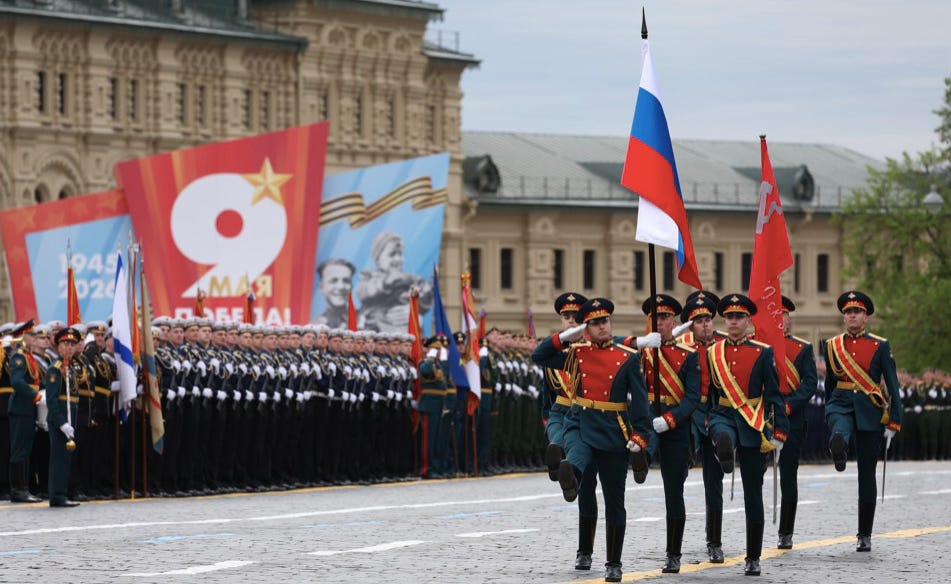
Much ink was spilled in recent weeks over Moscow’s fascist parade on Red Square, which for the first time this year lacked military hardware of any kind and had to ask Kyiv’s permission to proceed without fear of Ukrainian drone attacks.
A fundamental issue remains unresolved: what kind of victory was won in 1945?
Certain features are clear enough. By late spring 1945, western Europe had been liberated — mostly by American, British, Canadian and French armies. They defeated Nazi occupiers in Italy, France, the Benelux and Scandinavian countries, as well as in Greece and most of Germany, By May 8th, the Nazi regime lay in ruins.
By late summer, Japan had also been defeated, which liberated many more countries and territories. These are the victories we celebrate on May 8th in Europe and on August 15th and September 2nd in Asia. For many independent states freed by allies from Nazi or Japanese tyranny, these anniversaries meant an end to violence and repression and the start of democratic renewal.
However, the Soviet Union and Russia never celebrated these anniversaries. Stalin did not see the Nazi surrender at Reims on May 7th, which was effective on May 8th in western time zones, as sufficient.
At his insistence, a second instrument of surrender was signed in the Soviet-occupied sector of Berlin late on May 8th, when Moscow was already in the early hours of May 9th. Stalin announced this formal victory to the Soviet people later that day.
This was much more than ceremonial one-upmanship. By carving out a moment in history in which Soviet commanders would have pride of place, Stalin aimed to demonstrate that without the scale and sacrifice of the Red army, the Nazi regime would have remained in power. He wanted to be seen as Europe’s pre-eminent conqueror. In all subsequent ideology and propaganda, Moscow sought to ensure the lion’s share of credit for Nazi defeat went to the Soviet Union.
